Small Japanese kitchen organization focuses on simplicity, efficiency, and thoughtful use of every available inch. Rather than filling a compact kitchen with excessive storage solutions, Japanese-inspired organization emphasizes keeping only what is useful while creating a clean and visually balanced environment. The result is a space that feels functional, peaceful, and surprisingly spacious despite limited square footage.
Many homeowners and apartment dwellers appreciate Japanese kitchen organization because it blends practicality with aesthetics. Clever storage techniques, streamlined layouts, and clutter-free surfaces make everyday cooking easier while helping the kitchen maintain a calm, welcoming atmosphere. Whether you have a tiny apartment kitchen or a compact family space, these ideas can help maximize both storage and style.
Enduring Principles Behind Japanese Kitchen Organization
Japanese kitchen organization continues to inspire homeowners because it prioritizes functionality without sacrificing visual harmony. Smart storage systems, intentional placement of daily essentials, and clutter reduction allow even the smallest kitchens to operate efficiently. These principles remain valuable regardless of changing design trends.
Another reason this organizational approach stays relevant is its adaptability. Compact city apartments, modern homes, and minimalist interiors all benefit from thoughtful storage solutions that create order while maintaining a sense of openness. The focus on simplicity and usability ensures these ideas remain practical year after year.
Vertical Open Shelving
Making use of wall space instantly expands storage opportunities without consuming valuable floor area. Open shelving allows frequently used dishes, mugs, and cooking essentials to remain accessible while keeping cabinets from becoming overcrowded. The arrangement creates a lighter visual appearance that helps small kitchens feel larger.
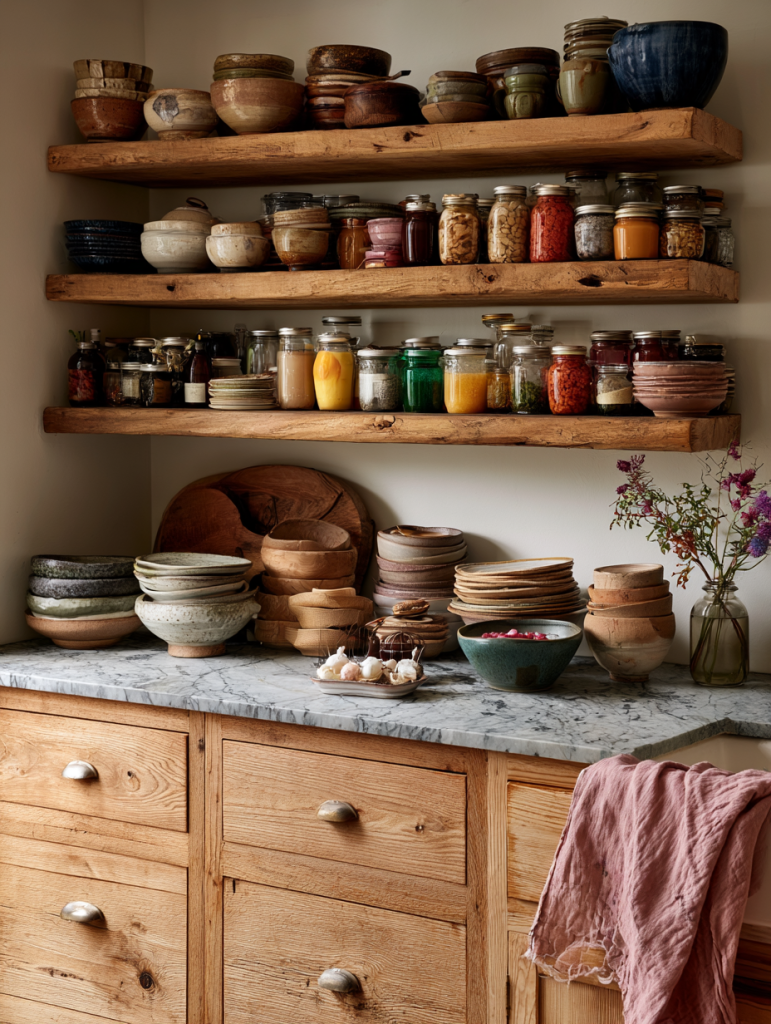
Carefully curated shelves prevent clutter from accumulating and encourage intentional organization habits. Neutral dishware, wooden accents, and evenly spaced items contribute to the calm aesthetic often associated with Japanese interiors. This simple solution combines storage efficiency with attractive visual presentation.
Under-Sink Storage Zones
Limited kitchen space makes every cabinet important, especially the area beneath the sink. Dividing this space into designated zones helps organize cleaning supplies, extra sponges, dish soap, and household essentials without creating confusion. Simple bins and stackable containers make it easier to maintain order.
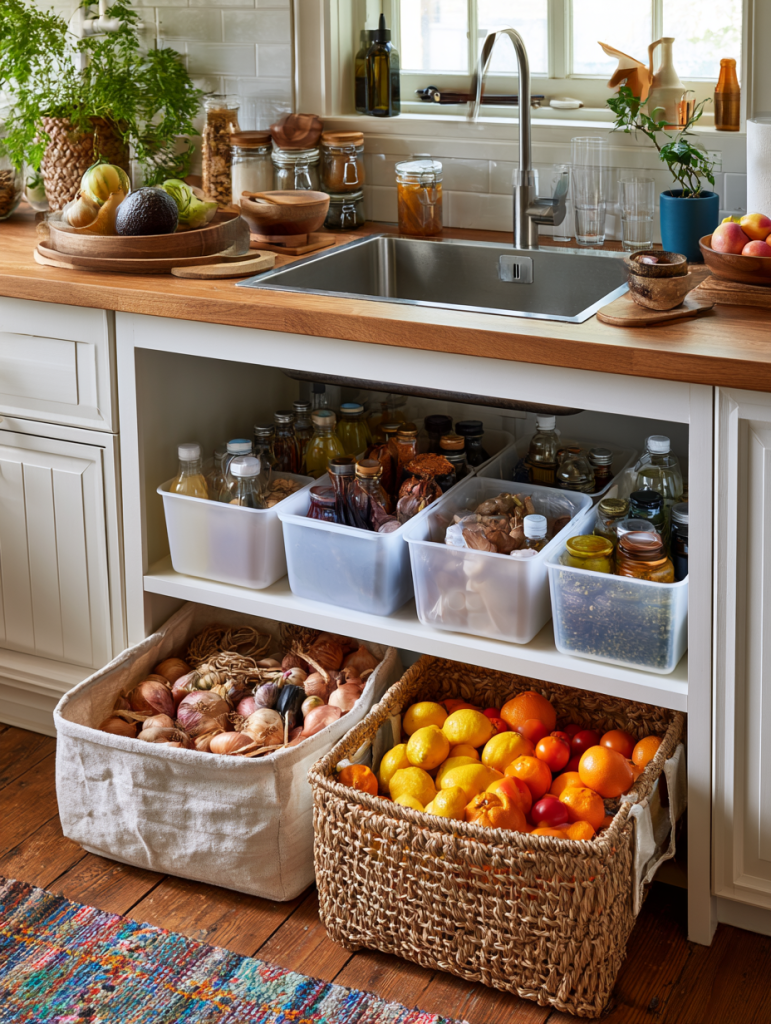
Rather than allowing miscellaneous items to pile up, clear categories improve accessibility and daily efficiency. Small adjustments such as labeled containers and compact organizers transform an often-neglected area into valuable storage. The result is a cleaner and more functional kitchen environment.
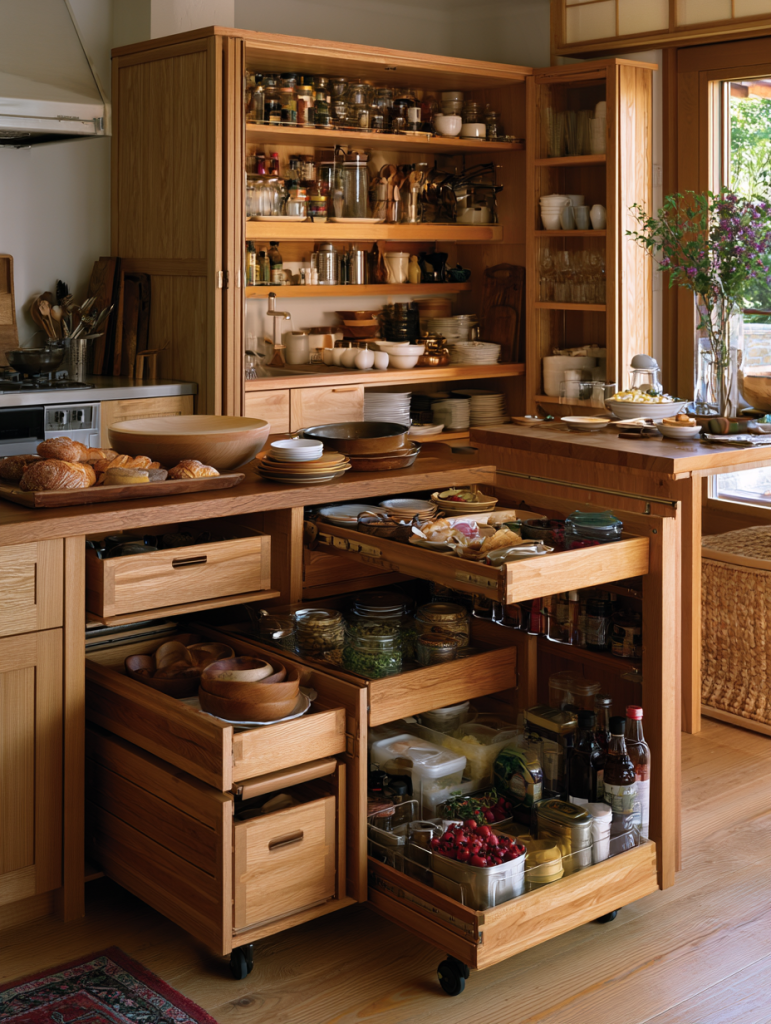
Slim Rolling Pantry Cart
Narrow gaps between appliances or cabinets often go unused in small kitchens. A slim rolling pantry cart takes advantage of these overlooked spaces by providing convenient storage for spices, oils, canned goods, and cooking ingredients while remaining easy to access.
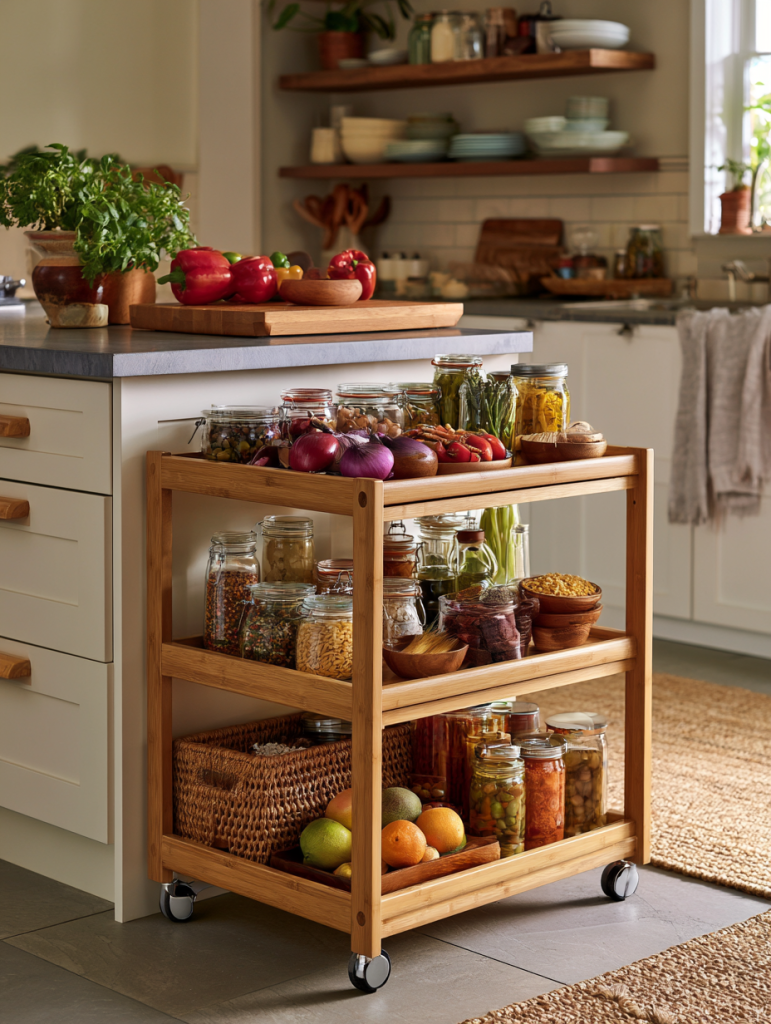
Since the cart can be moved whenever needed, it adds flexibility to the kitchen layout. Keeping frequently used ingredients neatly organized reduces countertop clutter and simplifies meal preparation. This practical solution reflects the efficient use of space commonly seen in Japanese homes.
Minimalist Countertop Storage
Clear countertops play an important role in making compact kitchens feel open and organized. Limiting visible items to daily essentials creates a cleaner appearance while improving functionality. Small trays or compact organizers help group frequently used tools without creating visual clutter.
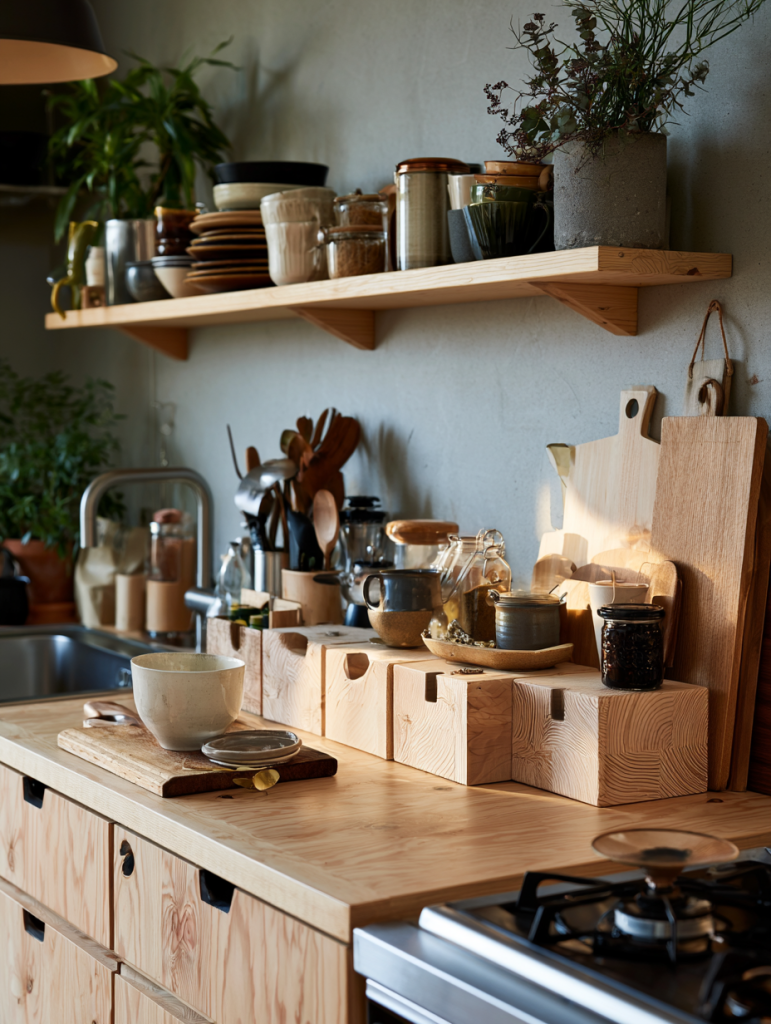
A minimalist approach encourages intentional storage decisions and reduces distractions during meal preparation. By keeping surfaces largely unobstructed, the kitchen appears more spacious and easier to maintain. This simple habit contributes significantly to the calm atmosphere associated with Japanese design.
Drawer Dividers for Kitchen Tools
Kitchen drawers can quickly become cluttered when utensils and gadgets lack designated storage areas. Drawer dividers create structure by assigning specific sections for cooking tools, measuring spoons, chopsticks, and other essentials commonly used throughout the day.
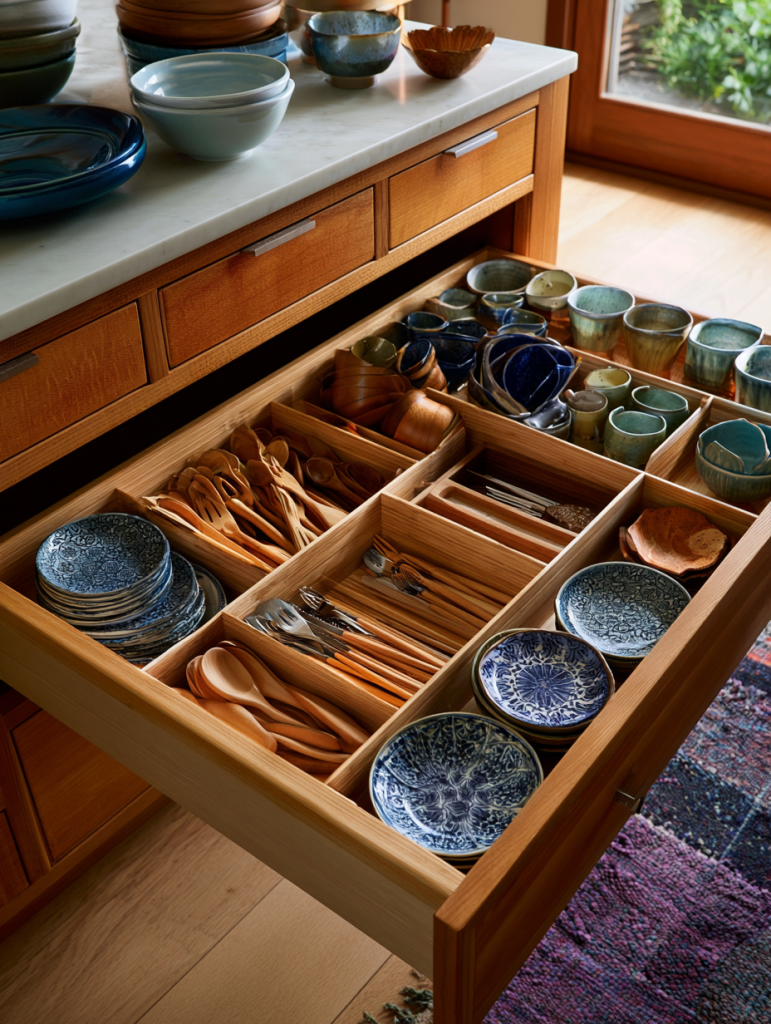
Organized drawers improve efficiency because everything remains visible and easy to locate. Instead of searching through tangled utensils, you can quickly find exactly what you need. This method supports the Japanese philosophy of creating orderly systems that simplify daily routines.
Hanging Rail Storage System
Installing a hanging rail above a countertop or backsplash provides valuable storage without occupying cabinet space. Cooking utensils, small baskets, and lightweight kitchen tools remain within reach while contributing to an organized and functional workspace.
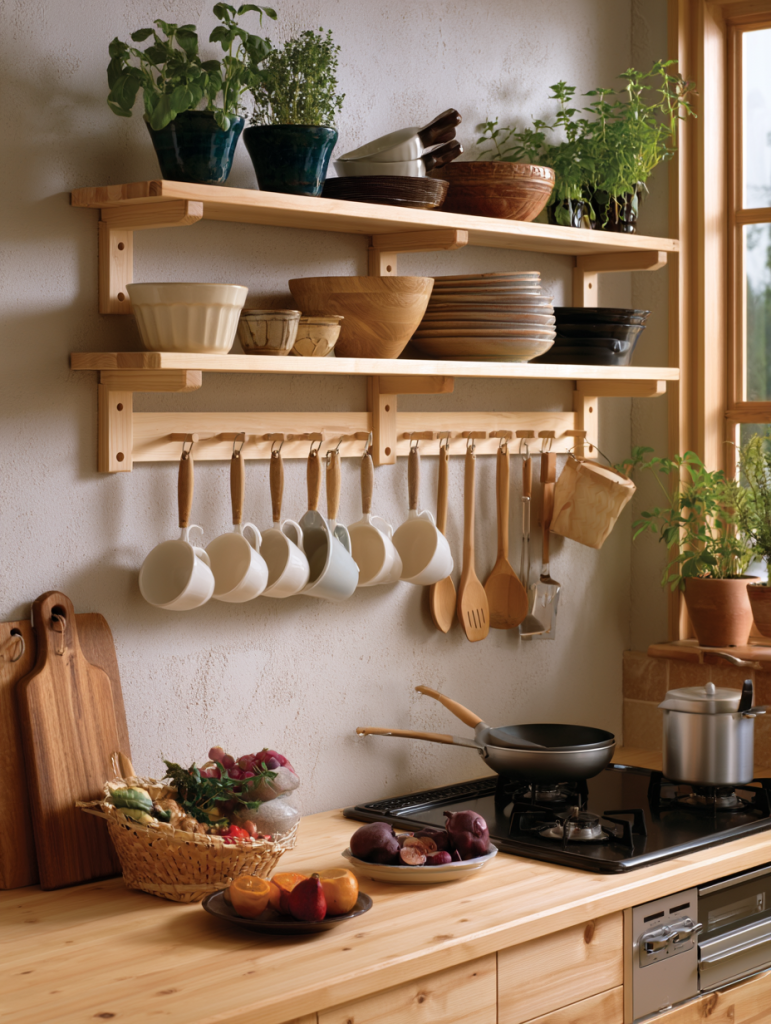
Because items are displayed vertically, the kitchen gains additional storage capacity without feeling crowded. Selecting matching hooks and accessories helps maintain a cohesive appearance. This practical solution combines convenience with the clean aesthetic often found in compact Japanese kitchens.
Stackable Food Containers
Food packaging often creates unnecessary visual clutter inside cabinets and pantries. Transferring ingredients into stackable containers improves organization while maximizing available storage space. Uniform containers fit neatly together and make inventory management much easier.
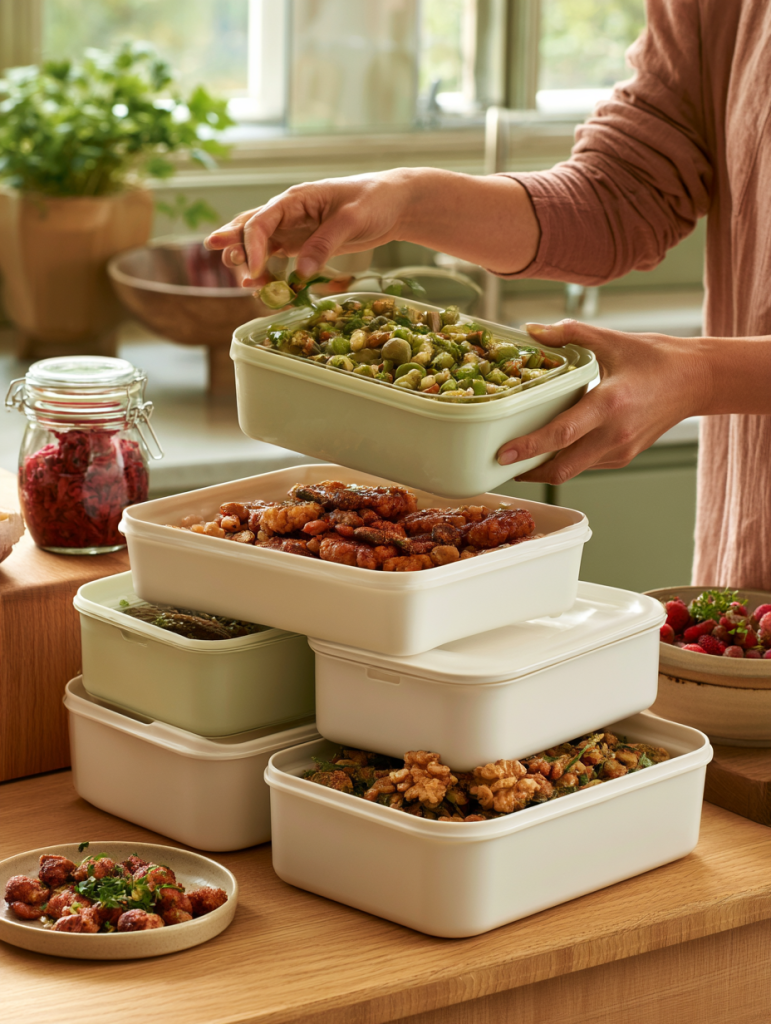
Additionally, clear containers allow quick identification of ingredients without opening multiple packages. This approach promotes tidiness and reduces food waste by keeping supplies visible. The streamlined appearance supports the minimalist principles commonly associated with Japanese organization.
Foldable Kitchen Accessories
Space-saving accessories offer tremendous value in compact kitchens. Foldable dish racks, collapsible colanders, and compact storage solutions provide functionality when needed while occupying minimal space when stored away after use.
These versatile tools help maintain uncluttered countertops and cabinets throughout the day. By reducing the amount of permanently visible equipment, the kitchen feels more open and manageable. Flexible storage solutions align perfectly with efficient Japanese-inspired living.
Corner Cabinet Optimization
Corners often become difficult storage areas that collect forgotten items. Utilizing rotating trays, pull-out organizers, or carefully arranged baskets helps transform these awkward spaces into practical storage zones for cookware and pantry supplies.
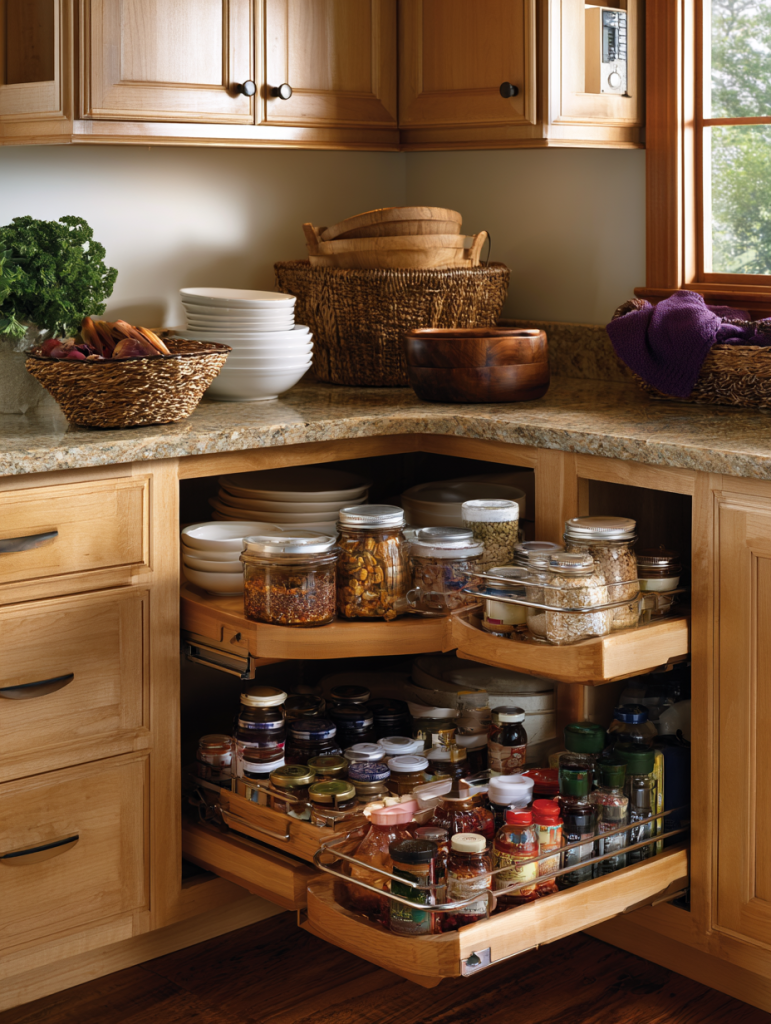
Improved accessibility ensures items remain easy to reach rather than disappearing into the back of cabinets. Making full use of corner storage increases overall kitchen capacity without requiring additional furniture. This strategy maximizes every inch available in a small kitchen.
Hidden Appliance Storage
Small appliances can quickly dominate limited countertop space when left out permanently. Creating designated cabinet storage for blenders, rice cookers, and other occasional-use appliances helps maintain a cleaner and more organized appearance.
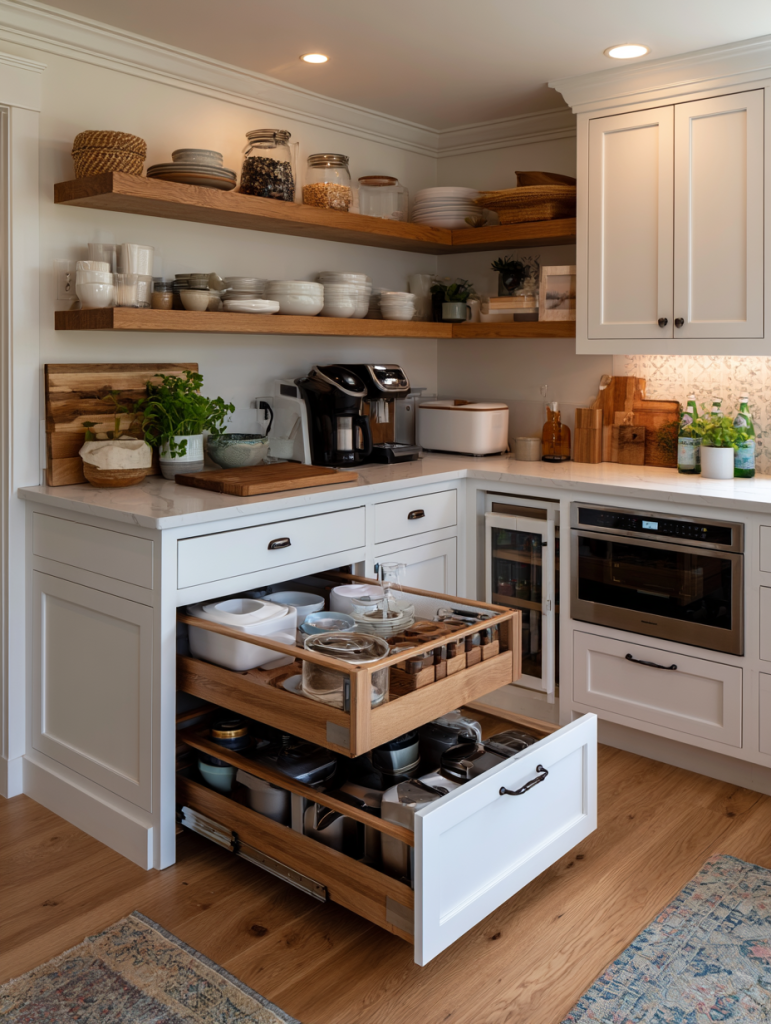
Keeping appliances stored when not in use frees valuable preparation space and reduces visual clutter. The kitchen immediately feels calmer and more spacious. This thoughtful approach reflects the Japanese preference for maintaining clean, purposeful environments.
Creating a More Functional Japanese-Inspired Kitchen
Successful Japanese kitchen organization depends on consistency and intentionality rather than expensive storage products. Start by removing unnecessary items, then assign dedicated storage locations for everyday essentials. Prioritize accessibility and simplicity when arranging cabinets, shelves, and drawers.
Maintaining clear countertops, utilizing vertical storage, and embracing multifunctional solutions can dramatically improve both appearance and efficiency. Small organizational changes often create the biggest impact in compact kitchens where every inch matters.
Final Thoughts
Small Japanese kitchen organization demonstrates that limited space does not have to limit functionality. Through thoughtful storage solutions, clutter reduction, and efficient layouts, even the smallest kitchen can feel calm, practical, and inviting. By adopting these organization ideas, you can create a space that supports daily routines while maintaining the timeless simplicity that makes Japanese design so appealing.