A Minimal Japandi Living Room brings together the clean functionality of Scandinavian design and the serene simplicity of Japanese interiors. This design style focuses on creating calm, uncluttered spaces that feel welcoming and intentional. Natural materials, neutral colors, and thoughtfully selected furnishings work together to create a living room that promotes relaxation and balance without sacrificing comfort.
One of the reasons Japandi design continues to grow in popularity is its timeless appeal. Instead of following fast-changing trends, it emphasizes quality craftsmanship, natural textures, and purposeful decor. The result is a living room that feels elegant, practical, and beautifully understated for years to come.
What Makes Japandi Design So Enduring?
Japandi interiors remain relevant because they prioritize simplicity and functionality. Every piece serves a purpose, helping create a space that feels organized and visually harmonious.
Another reason this style continues to inspire homeowners is its versatility. Whether used in a small apartment or a spacious home, Japandi principles help create a peaceful atmosphere through thoughtful design choices and restrained decoration.
Low Wooden Sofa with Linen Cushions
A low-profile wooden sofa creates the grounded aesthetic that defines many Japandi interiors. The clean silhouette keeps the room feeling open while soft linen cushions introduce comfort and subtle texture.
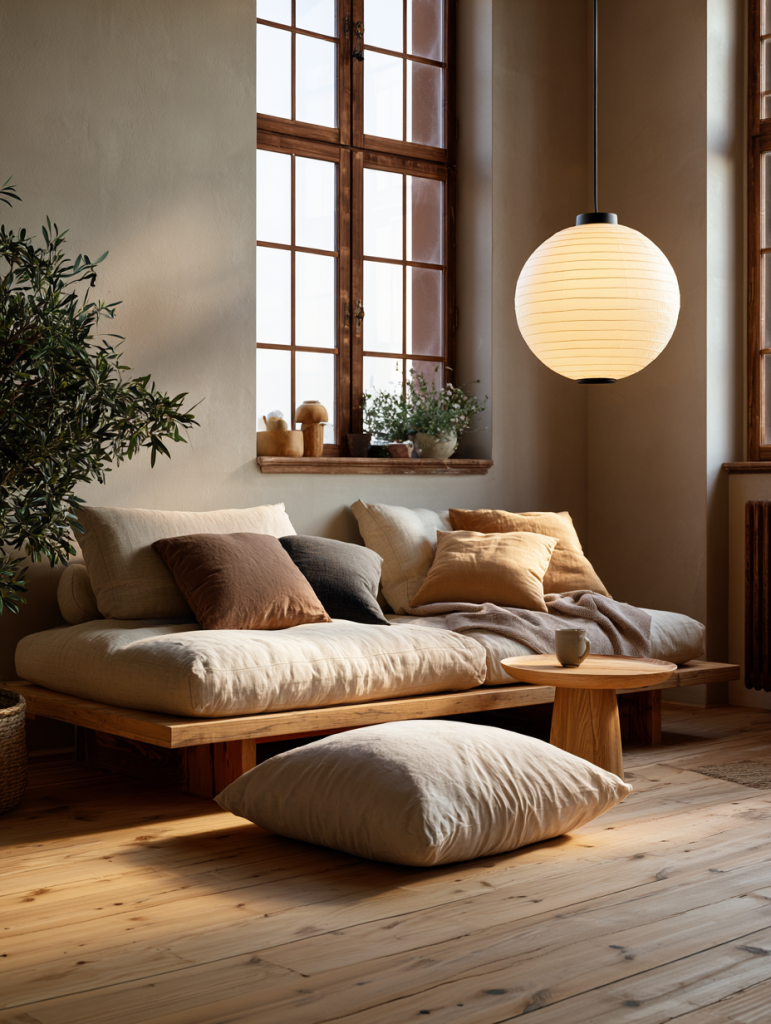
Natural wood tones bring warmth into the space without adding visual clutter. This combination creates a relaxed and inviting focal point that feels both modern and timeless.
Soft Beige and Cream Palette
A palette built around soft beige, cream, and warm white shades creates a calm and cohesive environment. These colors reflect natural light beautifully and help the room feel larger and more open.
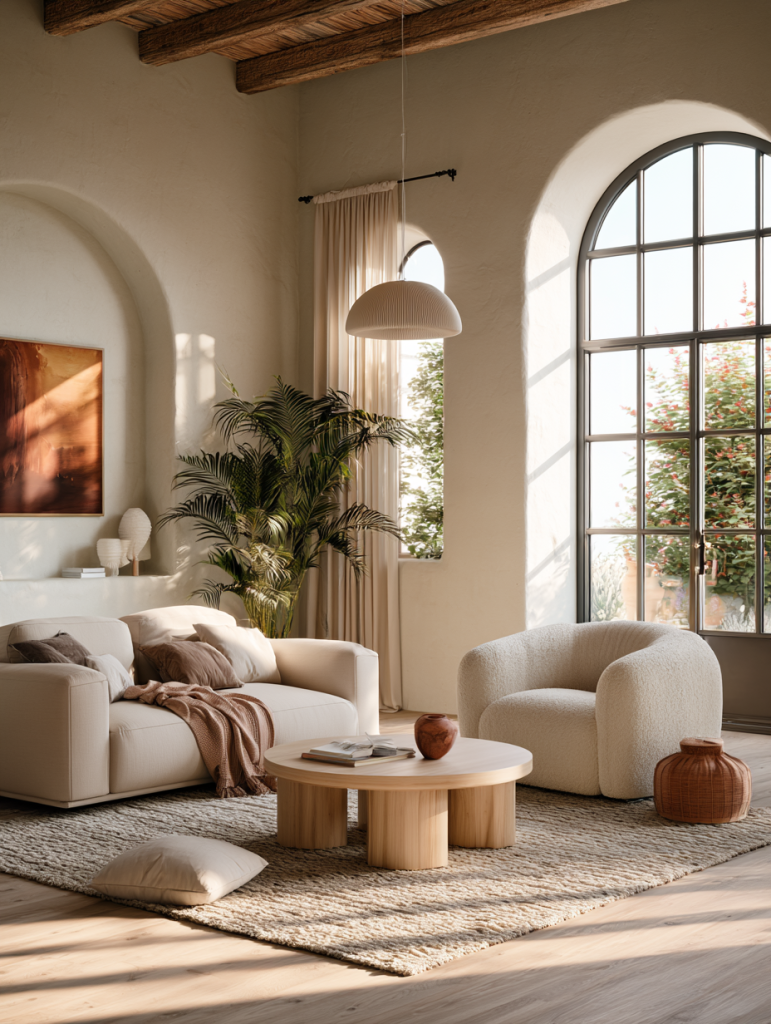
The neutral backdrop also allows textures and materials to become the primary source of visual interest. The result is peaceful, sophisticated, and effortlessly elegant.
Light Oak Coffee Table
A simple oak coffee table introduces natural character while maintaining the minimalist aesthetic. The organic wood grain adds warmth and texture without overwhelming the space.
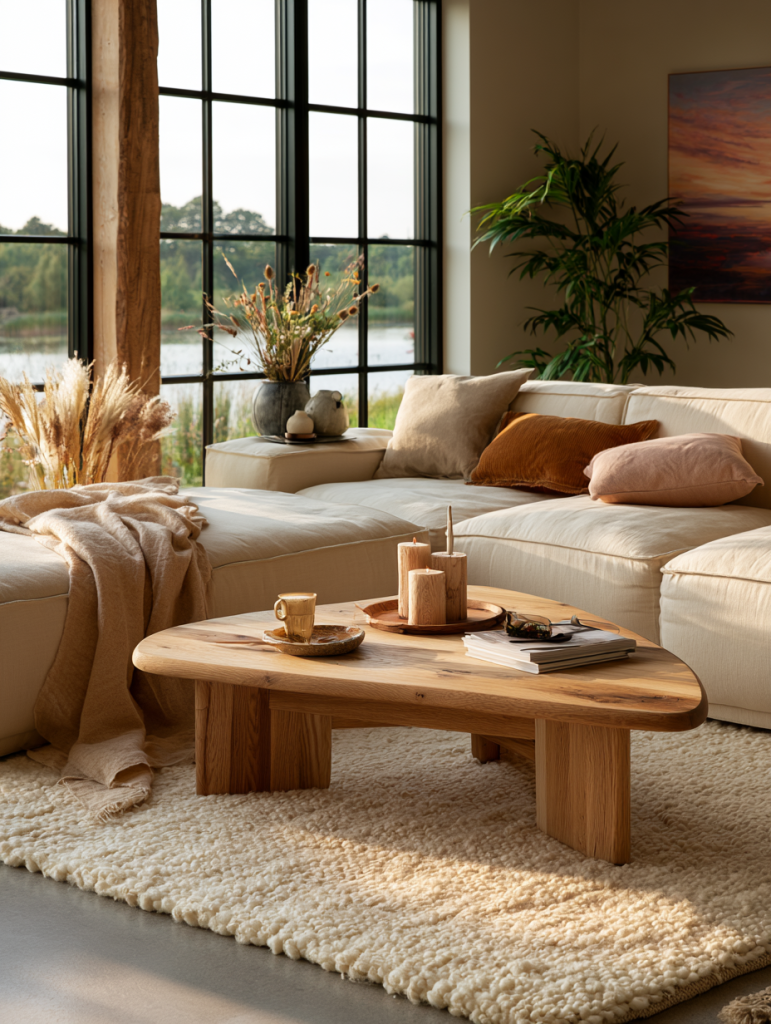
Its clean lines complement the surrounding furnishings and reinforce the understated beauty of Japandi design. The piece feels practical, timeless, and visually balanced.
Textured Neutral Rug
A textured rug in a soft neutral tone helps define the seating area while adding warmth underfoot. Subtle woven patterns provide depth without disrupting the calm atmosphere.
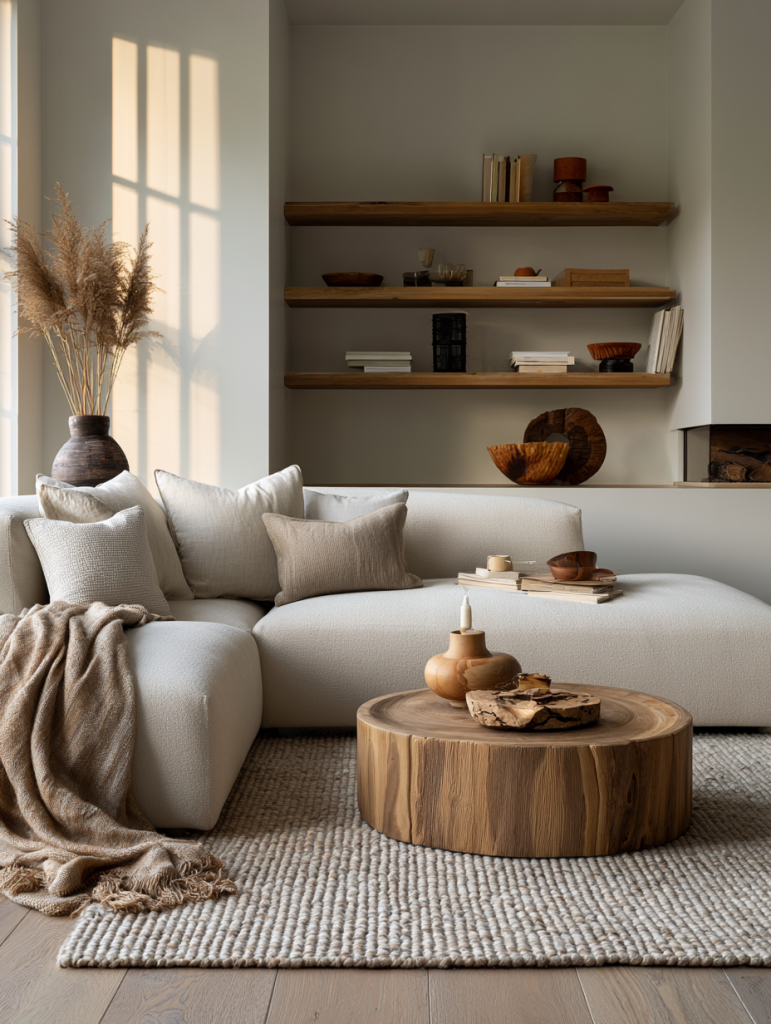
The layered texture contributes comfort and softness to the room. This simple addition enhances the overall coziness while preserving the minimalist look.
Wooden Slat Feature Wall
A wooden slat accent wall introduces architectural texture while maintaining a natural and refined appearance. The vertical lines create visual interest and help draw attention upward.
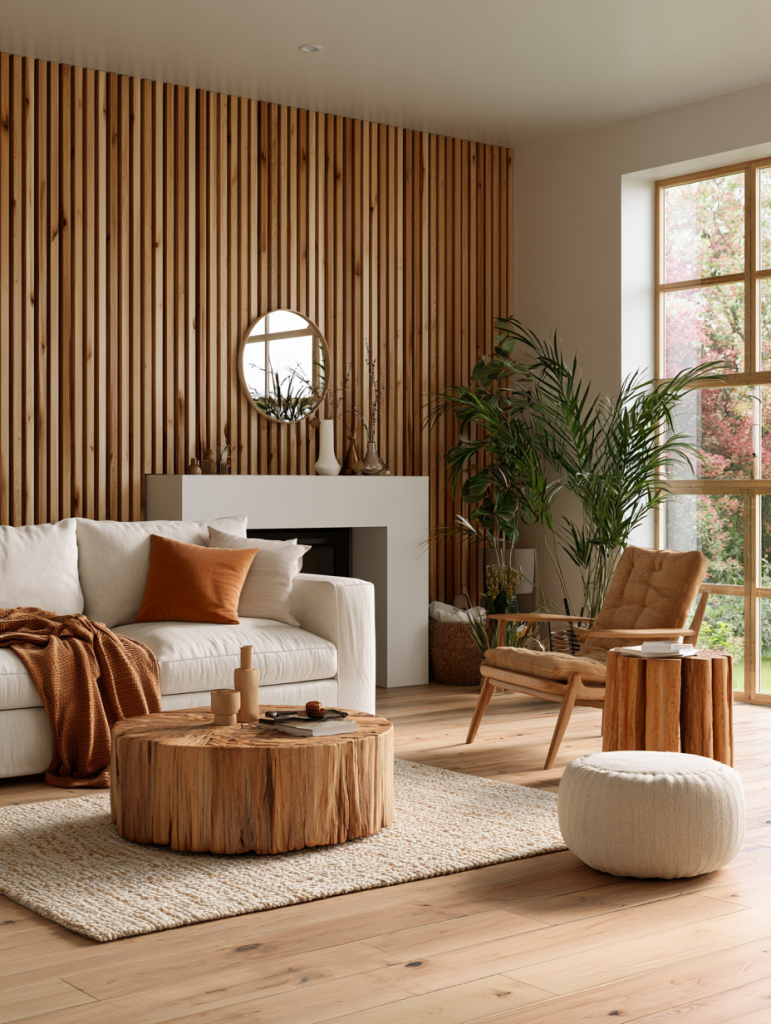
The warm wood tones complement neutral furnishings beautifully. This feature adds depth and sophistication while remaining consistent with Japandi simplicity.
Minimal Open Shelving
Open shelving styled with a few carefully selected items creates an organized and uncluttered display. Books, ceramics, and natural decor pieces add personality without overwhelming the room.
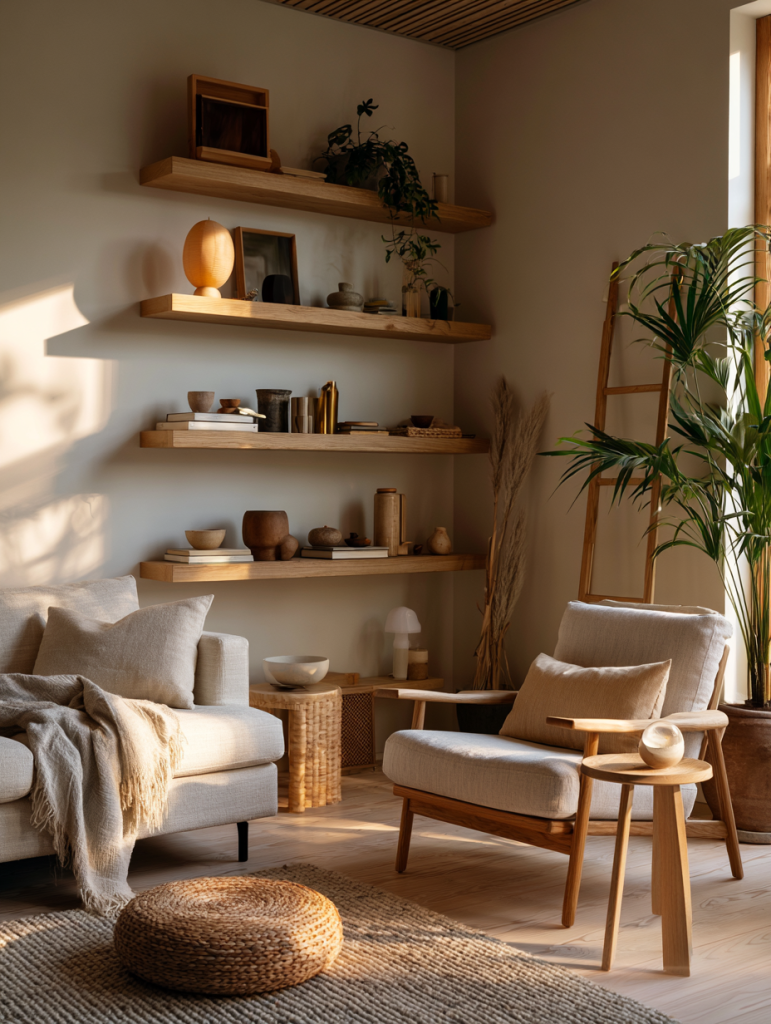
The intentional arrangement reinforces the Japandi philosophy of thoughtful living. Empty space is just as important as the objects displayed.
Black Accent Lighting
Simple black lighting fixtures create subtle contrast within a neutral living room. Their clean lines add definition while maintaining the understated elegance of the design.
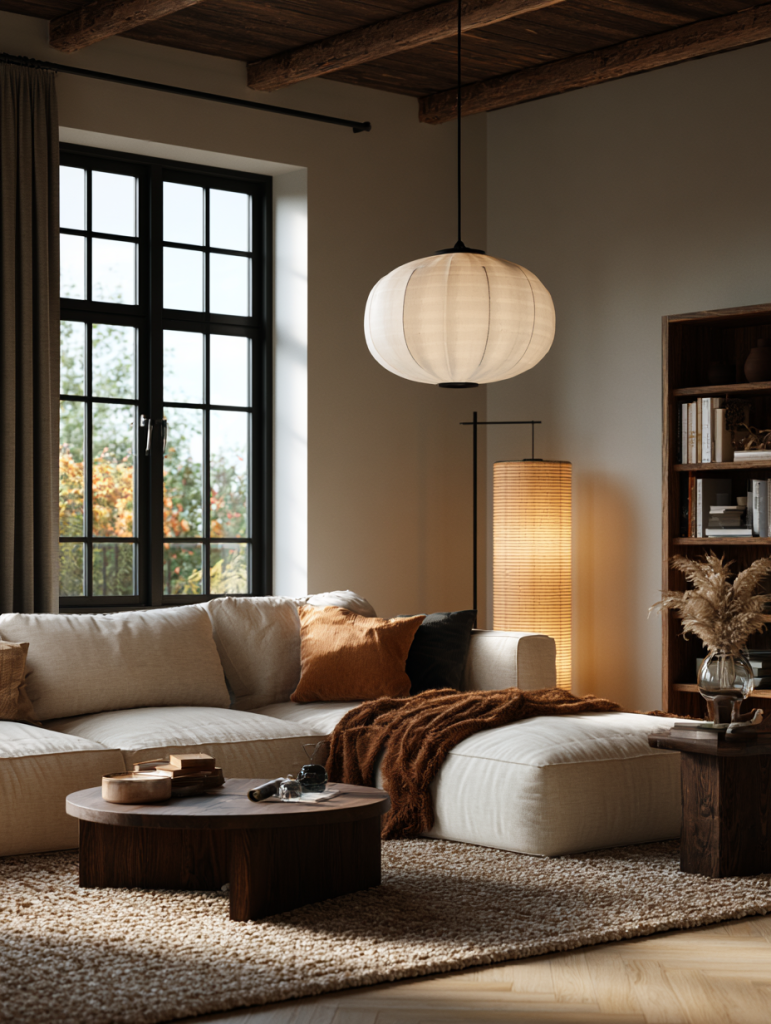
The dark accents help balance lighter tones and introduce a contemporary touch. Used sparingly, they enhance the room without disrupting its peaceful atmosphere.
Indoor Zen Corner
A quiet corner with a comfortable chair, small side table, and soft lighting creates a dedicated space for reading or relaxation. This intentional area encourages mindfulness and calm.
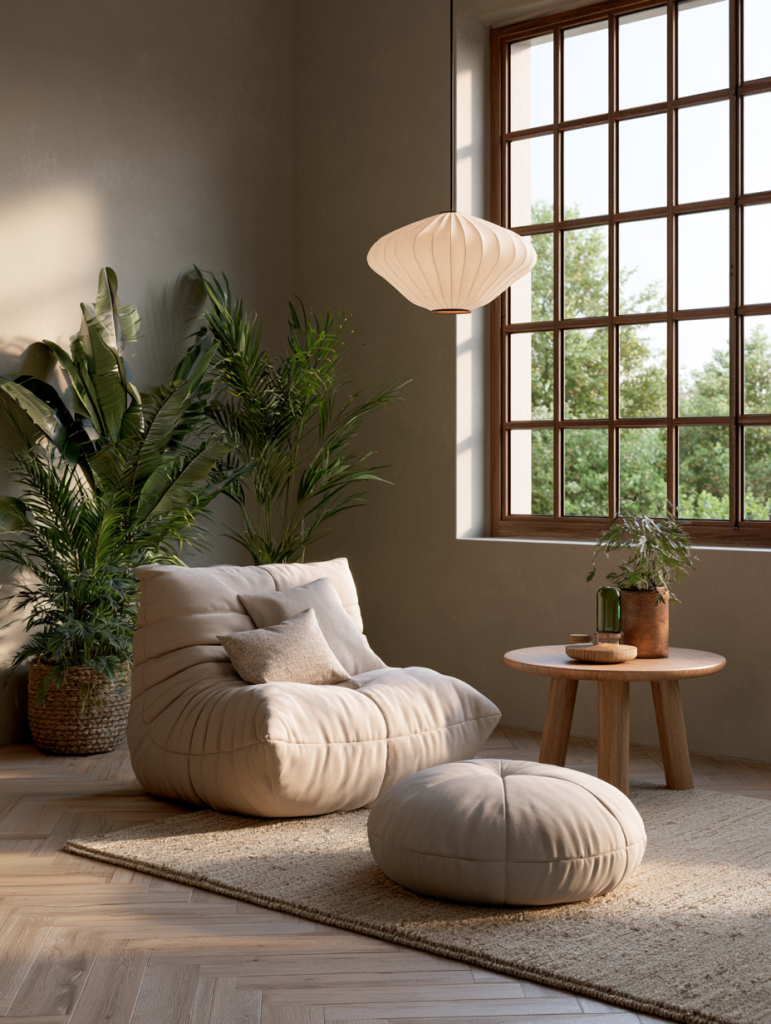
The uncluttered setup reflects the balance and simplicity central to Japandi design. It also adds functionality without requiring significant space.
Natural Wood and Stone Decor
Combining wood and stone elements introduces organic texture and visual harmony. Simple decorative objects crafted from natural materials reinforce the connection to nature that is essential in Japandi interiors.
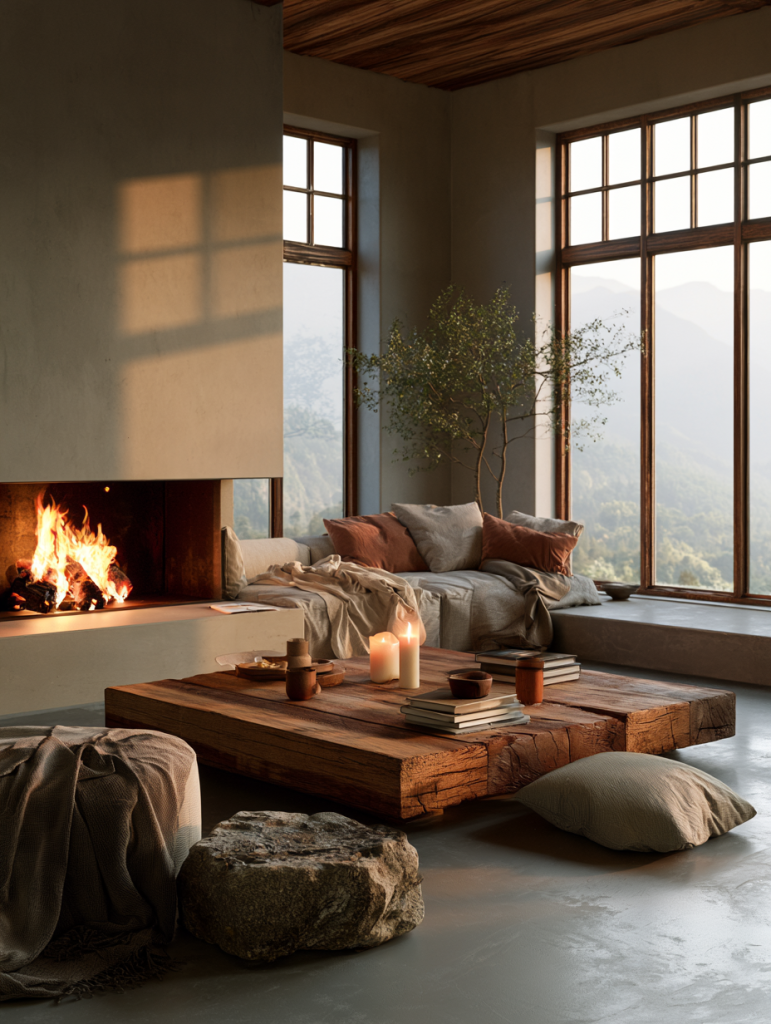
The restrained use of decor keeps the room feeling clean and balanced. These materials add character while maintaining a minimalist appearance.
Floor Seating Arrangement
A floor seating area with simple cushions and a low table creates a relaxed and inviting gathering space. Inspired by traditional Japanese interiors, this arrangement promotes a grounded and comfortable atmosphere.
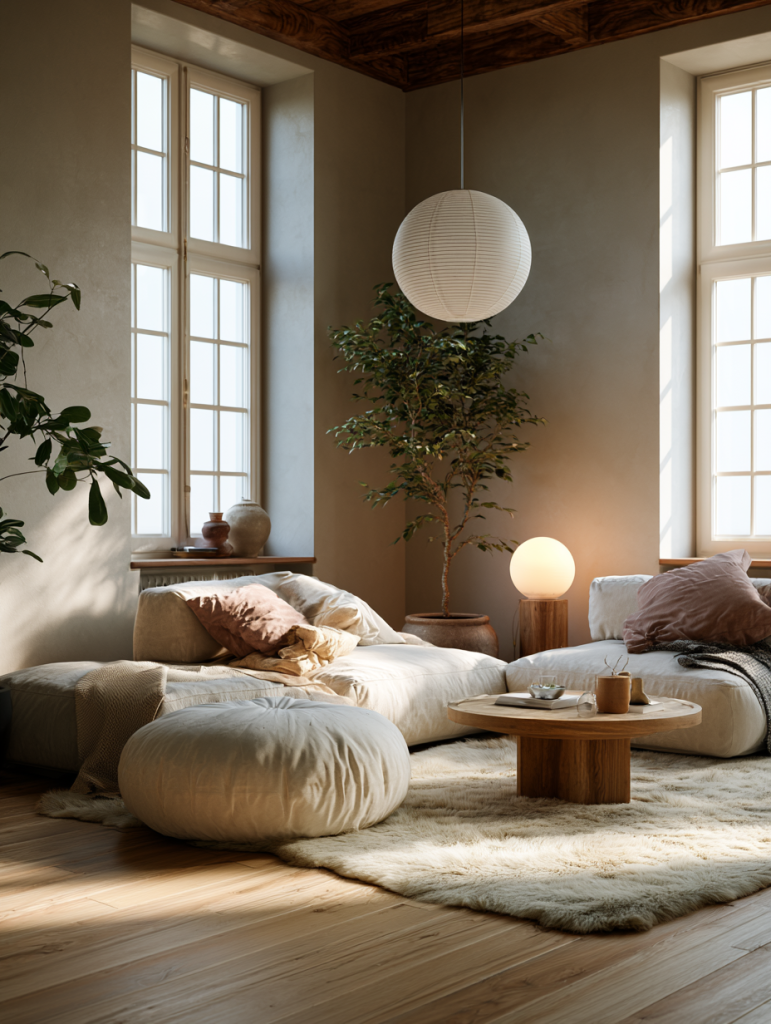
The low-profile setup works especially well in smaller living rooms. It enhances openness while contributing to the room’s serene aesthetic.
Creating Balance Through Simplicity
The essence of Japandi design lies in choosing fewer but better pieces. Prioritizing quality materials, thoughtful layouts, and functional furniture helps create a living room that feels intentional and harmonious.
Natural light, subtle textures, and uncluttered surfaces further enhance the calming effect. Together, these elements create a space that supports relaxation and everyday comfort.
Final Thoughts
Minimal Japandi Living Room ideas demonstrate how simplicity can create extraordinary beauty. From low wooden furniture and soft neutral palettes to natural materials and mindful decor, these design choices cultivate a peaceful and timeless environment. By focusing on balance, warmth, and functionality, you can create a living room that feels both sophisticated and deeply relaxing.